Explore bat control services
 01
Inspection & Dusk Count
A walk around the roofline and attic, plus a dusk watch to see exactly where bats come out.
Explore this service 02
One-Way Exclusion & Sealing
One-way devices let bats leave on their own, then every gap is sealed. Timed around pup season.
Explore this service 03
Droppings Cleanup
Careful removal of droppings and soiled insulation, with dust kept down, once the bats are gone.
Explore this service 04
Ask About a Quote
Tell us what you’ve noticed and ask about an inspection or a quote.
Explore this serviceWhy do bats keep coming back?
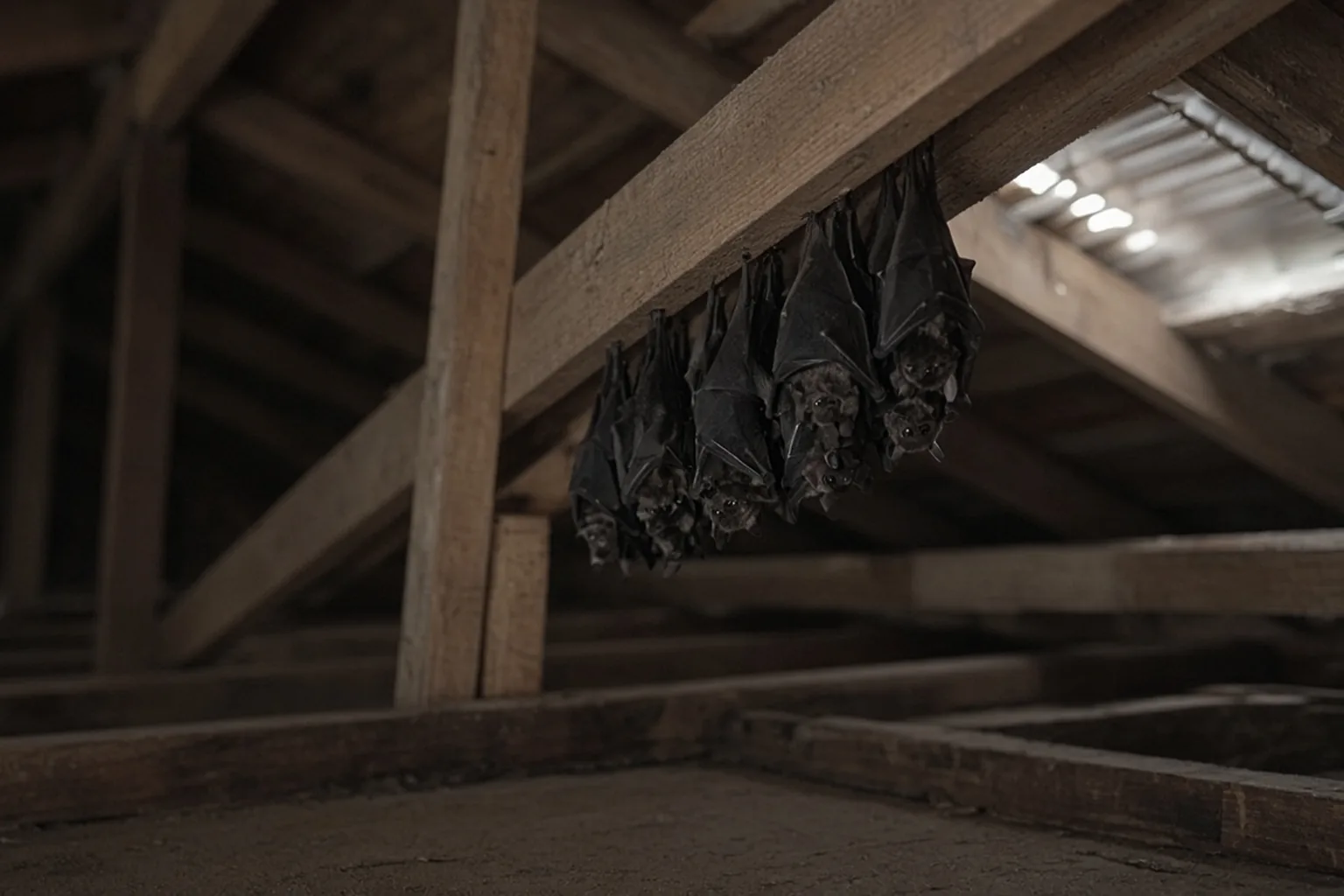
Bats are some of the best neighbors you can have outdoors. One bat can eat hundreds of insects a night. Inside the attic or walls, though, their droppings pile up, stains spread and the smell lingers.
Bats are protected, so the fix is careful, not quick: find where they get in, wait until any pups can fly, fit one-way devices so the bats leave on their own, then seal every gap. Never touch a bat with bare hands, and if one was in a bedroom, call your doctor before letting it go.
Below you'll find which bats live where you are, when they can be sealed out, how to handle droppings safely and what bat removal usually costs.
What kind of bat problem are you seeing?
Chirping at dusk
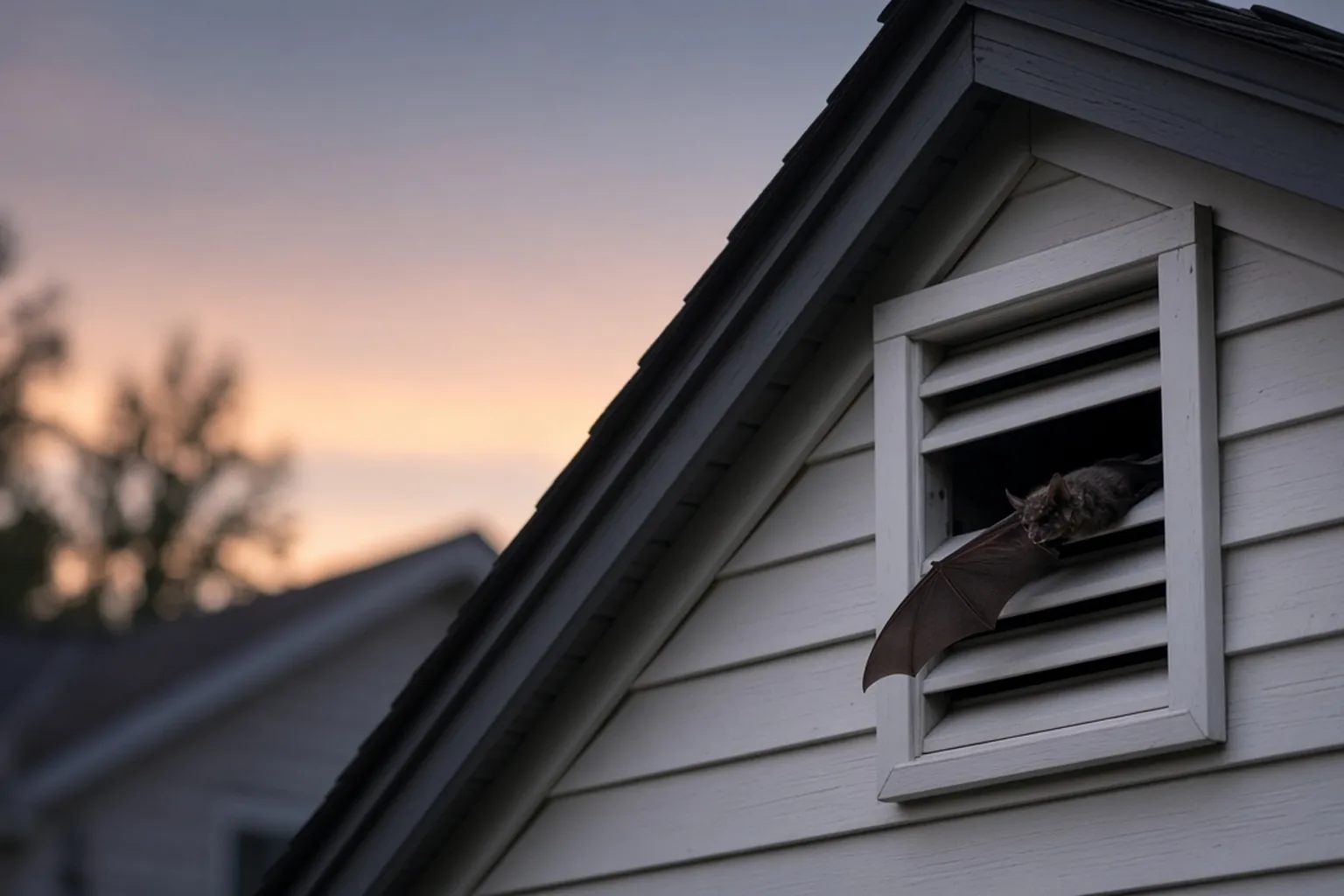
Rustling or squeaking in a wall or attic around sunset is a classic sign of bats heading out to feed.
Droppings under the eaves
Small dark droppings on sills, decks or walls below a gap. They crumble into shiny bits, unlike mouse droppings.
Stains around gaps
Dark, greasy marks around a small gap at the roofline show where bats squeeze in and out.
What should you ask before booking?
Ask what the visit includes, how much it costs, and whether a follow-up is included. It’s also helpful to know what you’ll need to do before treatment and when you can use the area again.
Have children or pets at home? Mention them when discussing treatment. For a business, let the company know your opening hours so you can talk about a convenient time to visit.
How bat activity changes through the year
- Spring: Bats return or wake up. Pups are born in late spring and early summer.
- Summer: Pups can't fly yet. Don't seal anything until they can.
- Fall: The best time to seal bats out, once pups are flying.
- Winter: Some bats hibernate in walls. Don't seal them in; wait for warmer weather.
Keep exploring your options
- Inspection & Activity Mapping — Document suspected openings, dusk activity, interior evidence, access limits, and timing questions before work is scoped.
- One-Way Exclusion Planning — Compare proposals for seasonally appropriate one-way devices, repair materials, monitoring, final closure, and follow-up.
- Droppings Cleanup Planning — Evaluate amount, access, disturbance, dust control, affected materials, disposal, and restoration as a separate written scope.
- Ask About a Quote — Tell us what you’ve noticed and ask about an inspection or a quote.
- Contact and quote request — ask a question or request a quote.